One of the most common things I hear from parents is some version of this: "She's so bright. She understands the work. So why is it always done at midnight, or not at all?"
It's a fair question, and it's often followed by a worry that the teen is lazy or doesn't care. In my experience, that's almost never the case. For many teens with ADHD, the gap between understanding a task and completing it on time comes down to a few specific executive function skills.
1. Time blindness: "now" and "not now"
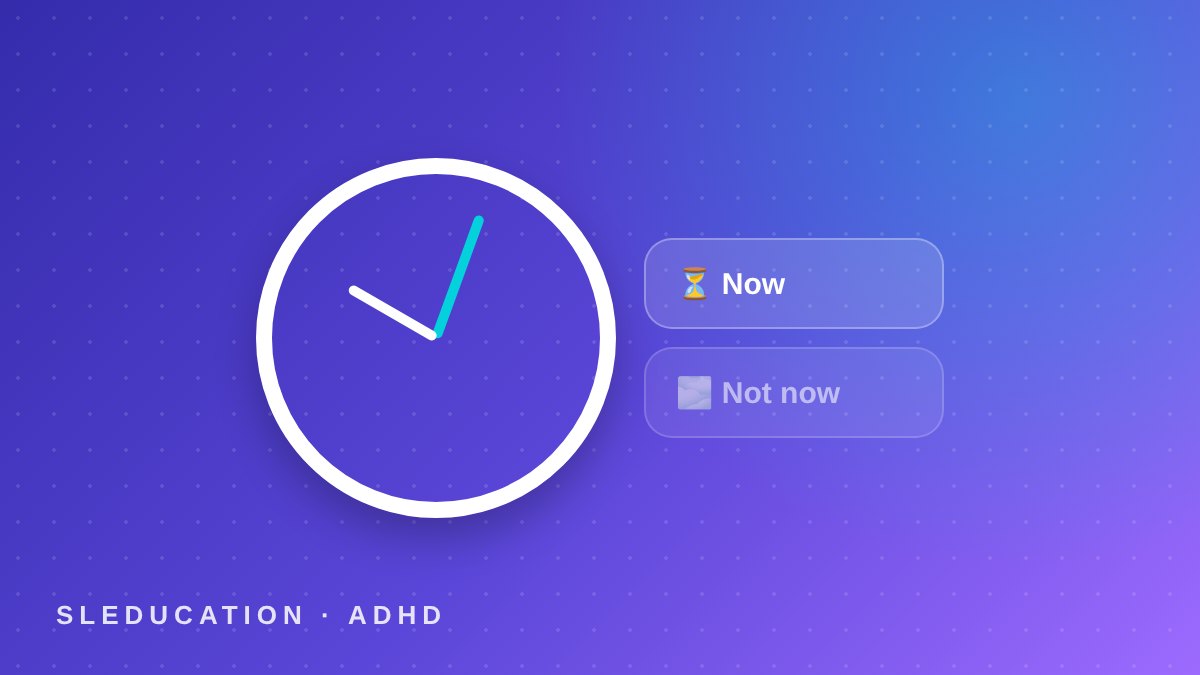
Russell Barkley describes ADHD as, in part, a difficulty with sensing and using time.[1] Many people with ADHD experience time in two zones: now and not now. A deadline in two weeks sits firmly in "not now", so it doesn't feel real. Then, suddenly, it's tomorrow.
This is why "you've had two weeks" rarely helps. The teen hasn't felt those two weeks the way an adult planning around a calendar has.
2. Getting started is its own skill
Task initiation is the ability to begin something, especially something that feels boring, big or unclear. For teens with ADHD, there can feel like a wall between deciding to start and actually starting. The bigger and vaguer the task ("revise for the exam"), the higher the wall.
Often, the thought that keeps the wall up is a small one: "I'll do it after this video." Spotting that thought is a core part of the CBT-informed work I do.
3. Working memory: the plan that disappears
Working memory is the mental notepad we use to hold information while we use it.[2] When it's under strain, instructions, steps and intentions can simply drop out. A teen might fully intend to email their teacher, then forget the moment they open their laptop and see something else.
What actually helps
Make time visible. Visual timers, a written countdown to the deadline, or blocks on a calendar can turn "not now" into something you can see.
Shrink the first step. "Write the essay" becomes "open the document and write the title". Starting is the hardest part, so make it tiny.
Plan backwards. Start from the deadline and work back to today, so there's a step for this week, not just a date in the distance.
Put the reminders outside the head. Alarms, sticky notes and checklists do the job working memory is struggling with. This isn't cheating. It's a strategy.
Catch the "later" thought. Noticing "I'll do it later" and answering it ("I'll do five minutes now") is a small skill that can be practised.
Practising it, not just planning it
In my sessions, we don't only make a plan. We practise the moment the plan usually breaks. I might set up a scene where the individual has an essay due in two hours and a friend messages with something funny. They practise stopping, noticing the "later" thought, and choosing what to do, out loud, in the moment.
It sounds simple, but rehearsing that moment is very different from talking about it afterwards. You can read more about the strategy I use in The Stop-Think Strategy.
